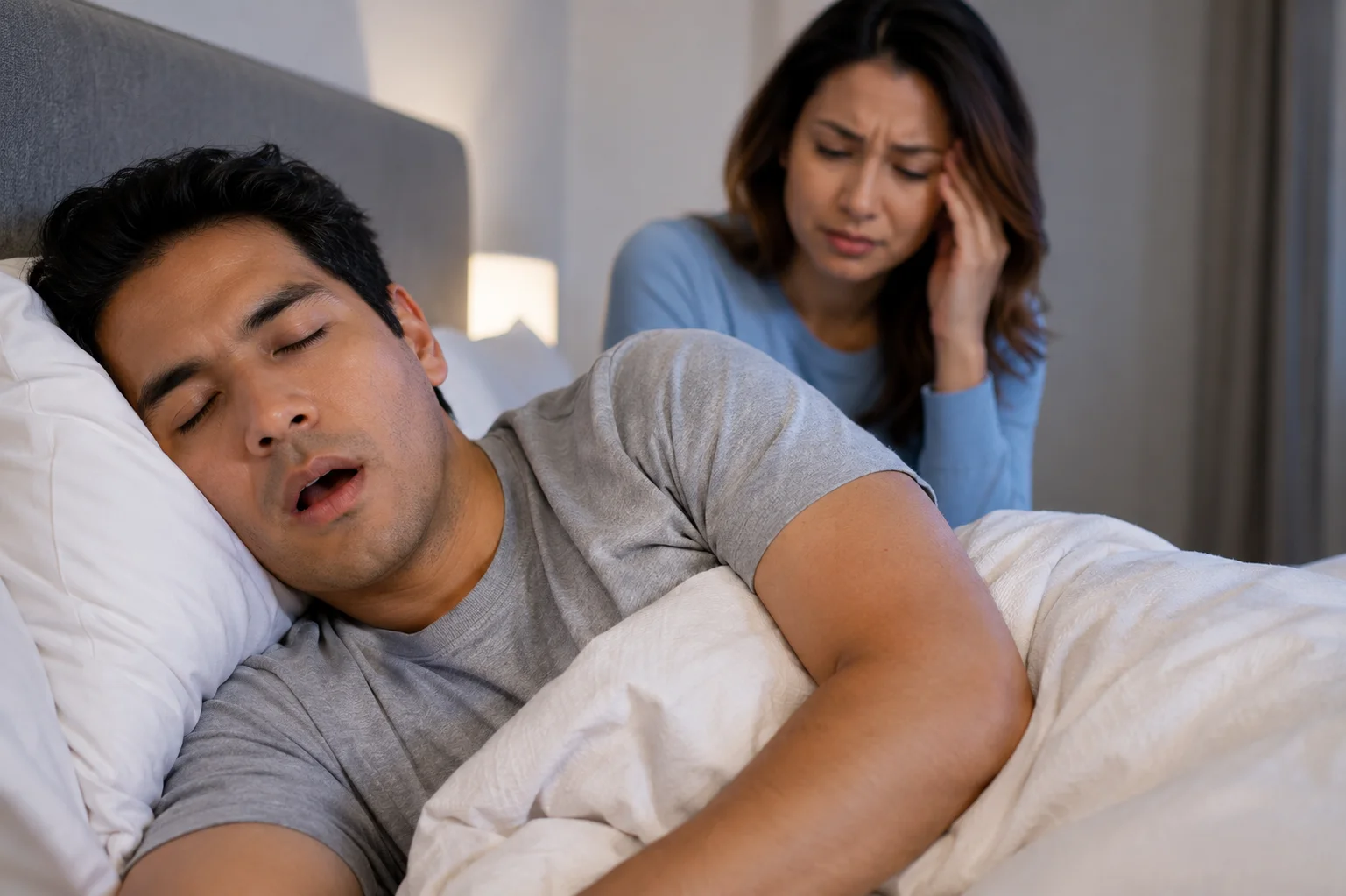

Snoring is one of those problems people dismiss as normal until it disrupts sleep for the whole house. Many adults in Desert Hot Springs wake up tired every morning without realizing their airway is the reason. Airway Dentistry DHS helps patients identify what is driving their snoring and find a path toward quiet rest. Dr. Juana R. Cavinder, DDS, MPH, has more than 30 years of clinical experience in airway-focused dentistry.
Snoring is not always harmless. For some patients it is the first sign of a deeper airway problem that will worsen without attention. Dr. Cavinder starts with understanding what is happening in your airway before recommending anything. Her goal is to give you a clear picture and a plan that addresses the real cause.
Why Snoring Happens
Snoring happens when airflow through the mouth or nose is partially blocked during sleep. Air forces its way through a narrowed passage, causing soft tissue in the throat to vibrate. The narrower the airway, the louder and more disruptive the snoring tends to be.
Several factors can narrow the airway during sleep. Jaw position plays a major role, as the lower jaw falls back when muscles relax at night. Excess throat tissue, a low soft palate, or a larger tongue all reduce airflow during sleep. Nasal congestion, alcohol use, and sleeping on your back can make things worse.
Many patients are surprised to learn that mouth and jaw structure directly affect nighttime breathing. Airway-focused dentistry looks at these structural factors as part of a complete picture. Addressing snoring at the source is more effective than any temporary fix.
When Snoring Becomes a Warning Sign
Snoring is easy to ignore when it feels like a minor inconvenience. But frequent or loud snoring can mean the airway is significantly restricted during sleep. Recognizing warning signs early gives you the best chance to address the problem before it affects your health. The following signs suggest your snoring may deserve a closer look:
- Waking up tired even after a full night of sleep
- Morning headaches that appear regularly without explanation
- A bed partner who notices pauses in your breathing during the night
- Difficulty concentrating or low energy that persists throughout the day
- Waking frequently during the night or feeling restless during sleep
These signs do not mean you have sleep apnea. They do mean something worth evaluating is happening in your airway. Dr. Cavinder takes each of these indicators seriously during her evaluation. Getting a clear picture early is far better than waiting until symptoms become harder to manage.
Snoring vs. Sleep Apnea: Understanding the Difference
Snoring and sleep apnea are related but not the same condition. Understanding the difference helps you walk in with better questions. Looking at both side by side makes the distinction easier to see.
| Snoring | Sleep Apnea | |
| Airway blockage | Partial | Complete or near-complete |
| Breathing pauses | No | Yes, repeatedly |
| Oxygen levels | Generally stable | Can drop significantly |
| Daytime symptoms | Mild fatigue possible | Significant fatigue, brain fog |
| Health risks | Lower if isolated | Cardiovascular, metabolic risks |
| Evaluation needed | Recommended | Sleep study required |
Some patients who snore do not have sleep apnea, and some with sleep apnea do not snore loudly. The only way to know is through a proper evaluation and, when appropriate, a sleep study. Dr. Cavinder helps you understand which category fits your situation and what the right next step looks like.
How Airway Dentistry DHS Treats Snoring
At Airway Dentistry DHS, snoring treatment focuses on airway structure rather than temporary fixes. Dr. Cavinder evaluates your bite, jaw position, and soft tissue to understand what is narrowing your airway during sleep. From there, she recommends the approach that addresses the specific cause in your case.
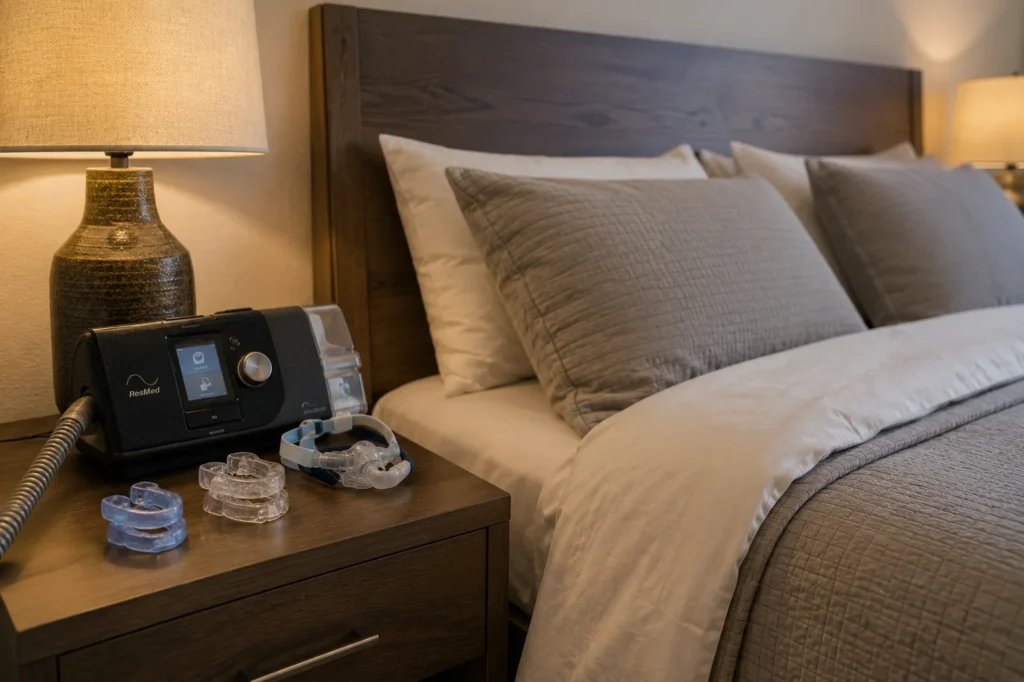
For most patients, a custom oral appliance is the primary treatment option. The device repositions the lower jaw during sleep to keep the airway open and reduce snoring. It is small, easy to travel with, and more comfortable than most patients expect. Patients across Desert Hot Springs and Palm Springs report real improvement within the first few weeks.
Who Is a Good Candidate for Snoring Treatment
Oral appliance therapy for snoring is not the right answer for every patient, and Dr. Cavinder will tell you that directly. The evaluation is designed to identify who will benefit and who may need a different approach. These factors generally support moving forward with a custom snoring appliance:
- Snoring confirmed by a bed partner or sleep recording as frequent and disruptive
- No prior diagnosis of severe obstructive sleep apnea requiring CPAP therapy
- Good overall dental health with enough stable teeth to anchor the appliance properly
- Willingness to attend follow-up visits so the device can be adjusted for best results
If your situation falls outside these parameters, Dr. Cavinder explains exactly why and walks you through a better path. She makes sure you leave every appointment with a clear direction. You will never walk out of Airway Dentistry DHS without fully understanding your options.
What to Expect at Your First Visit
Your first visit at Airway Dentistry DHS is built around listening and evaluation, not rushing to a recommendation. Dr. Cavinder reviews your snoring history, symptoms your bed partner has noticed, your bite, jaw position, and airway anatomy. If a sleep study is needed to rule out sleep apnea, she helps coordinate that first.
Once the evaluation is complete, Dr. Cavinder walks you through her findings in plain language. Patients from Mission Lakes, Wardman Heights, and Dos Palmas come here because they want answers without pressure. The feedback is consistent: they understood what was happening and felt confident taking the next step.
Your Bed Partner Will Thank You
Most patients who come to Airway Dentistry DHS for snoring have already tried every workaround they could find. They bought nasal strips, changed sleep positions, and still woke up exhausted every morning. They accepted broken sleep as simply how things were going to be. It does not have to stay that way.
Dr. Juana R. Cavinder, DDS, MPH, is a member of the ADA, the California Dental Association, and the AADSM. She takes a calm, education-first approach to every evaluation. Her goal is to make sure you understand your options fully before any decision is made. Schedule your consultation today at Airway Dentistry DHS or call (760) 329-2227.
Frequently Asked Questions
Is snoring always a sign of sleep apnea?
No. Snoring and sleep apnea are related conditions but not the same thing. Snoring happens when airflow is partially blocked during sleep, while sleep apnea involves repeated complete or near-complete blockages that interrupt breathing. Many people snore without having sleep apnea. However, frequent loud snoring combined with daytime fatigue, morning headaches, or breathing pauses noticed by a bed partner warrants a proper evaluation. Dr. Cavinder can help determine whether a sleep study is appropriate for your situation.
Can snoring be treated without surgery?
Yes. For most patients with primary snoring or mild to moderate sleep apnea, non-surgical options are effective and well-tolerated. Custom oral appliances are one of the most commonly recommended treatments. They reposition the jaw during sleep to keep the airway open and reduce or eliminate snoring. Surgery is generally considered only when conservative options have been tried and have not produced adequate results. Dr. Cavinder focuses on the least invasive approach that addresses the underlying airway cause.
Will my insurance cover snoring treatment?
Coverage for snoring treatment depends on whether the condition is diagnosed as medically necessary. Dental insurance typically does not cover oral appliances for primary snoring alone. However, if snoring is linked to a confirmed diagnosis of obstructive sleep apnea, many medical insurance plans will cover custom oral appliance therapy. At Airway Dentistry DHS, the team verifies your benefits before treatment begins so there are no surprises. You can review insurance and payment options before your first visit.
How long does it take to see results from a snoring appliance?
Most patients notice a reduction in snoring within the first one to two weeks of consistent use. Early on, mild jaw soreness or increased saliva production is normal and typically resolves as your muscles adapt. Dr. Cavinder schedules follow-up visits to fine-tune the fit and make sure the device is working as intended. Patients who attend follow-ups consistently report the strongest and most lasting results. The full benefit is usually felt within four to six weeks of regular nightly use.
Related Articles


