
Many people hear from a partner that they snore, but they are not sure whether it is just snoring or sleep apnea. Simple snoring happens when air moves through a slightly narrowed airway and causes tissues in the throat to vibrate. Sleep apnea is different. With sleep apnea, breathing repeatedly pauses or slows down during sleep, which lowers oxygen levels and disrupts normal sleep cycles.
At Airway Dentistry in Desert Hot Springs, Dr. Juana R. Cavinder, DDS, MPH, helps patients understand how airway health affects sleep quality and overall wellness. Dr. Cavinder has more than 30 years of clinical experience and advanced training in airway-focused dentistry. Her work combines general dentistry, dental implants, and airway-centered care for obstructive sleep apnea. She is a member of the American Dental Association, California Dental Association, Tri County Dental Society, and the American Academy of Clear Aligners.
What Is Simple Snoring?
Snoring is the sound created when air flows past relaxed tissues in the throat during sleep. As those tissues vibrate, they create the familiar rumbling or rattling sound that partners often notice first. Snoring usually occurs when the airway becomes slightly narrow due to sleeping position, nasal congestion, alcohol use, or simple fatigue.
Many people snore occasionally without having a serious sleep disorder. For example, someone might snore after a late night, during allergy season, or when sleeping on their back. In these situations the airway is partially narrowed but breathing continues normally.
However, snoring still means the airway is working harder than it should. Over time, factors such as weight gain, aging, or airway anatomy can increase the likelihood that simple snoring progresses into a more serious breathing disorder.
What Is Sleep Apnea?
Sleep apnea is a sleep disorder where breathing repeatedly stops or becomes very shallow during sleep. These pauses often last ten seconds or longer and can happen dozens of times each hour. Each time breathing slows or stops, the brain briefly wakes the body so normal breathing can restart. Most people do not remember these awakenings, yet they still interrupt healthy sleep cycles.
Because sleep keeps getting disrupted, many adults wake up feeling unrefreshed even after spending enough time in bed. Common symptoms include loud snoring, gasping or choking during sleep, morning headaches, dry mouth, and persistent daytime fatigue. Over time these repeated breathing interruptions can also affect concentration, mood, and overall health.
Snoring vs Sleep Apnea: Key Differences
sleep apnea and snoring share some overlapping signs, yet the underlying problem is different. Snoring is primarily a sound caused by vibrating tissue, while sleep apnea involves repeated interruptions in breathing that affect sleep quality and health.
| Feature | Simple Snoring | Sleep Apnea |
| Breathing | Airflow continues during sleep | Breathing pauses or slows repeatedly |
| Nighttime Signs | Rhythmic snoring without pauses | Snoring plus gasping or choking |
| Daytime Effects | Often minimal symptoms | Fatigue, headaches, brain fog |
| Health Impact | Usually mild unless severe | Linked with heart and metabolic risks |
Understanding these differences helps adults decide when snoring might need medical evaluation. When snoring includes breathing pauses, choking sounds, or daytime sleepiness, doctors often recommend testing for sleep apnea.
When Snoring Is Probably “Just Snoring” vs When to Worry
Not every snore requires a sleep study. Some snoring happens occasionally and does not cause daytime symptoms. However, certain patterns can signal that breathing problems are developing.
• Soft or occasional snoring without daytime fatigue
• Snoring only during illness, allergies, or unusual sleep schedules
• Loud snoring most nights that is gradually getting worse
• Snoring combined with gasping, choking, or breathing pauses
• Snoring plus excessive daytime sleepiness or morning headaches
Snoring becomes more concerning when it appears alongside daytime fatigue, concentration problems, or witnessed breathing pauses. If a partner reports that breathing stops during sleep, evaluation by a healthcare provider is usually recommended.
Why Snoring and Sleep Apnea Happen
Snoring and sleep apnea develop when the airway becomes narrower during sleep. As throat muscles relax, the tongue and soft tissues in the back of the throat can partially block airflow. In simple snoring, air continues moving through the airway but causes tissues to vibrate and create noise.
Sleep apnea occurs when that narrowing becomes severe enough that breathing repeatedly pauses or slows down. Factors such as airway anatomy, body weight, alcohol use, aging, and nasal congestion can all make airway collapse more likely. Because these factors often overlap, some people begin with mild snoring that gradually progresses into sleep apnea as conditions change.
How Doctors Tell the Difference
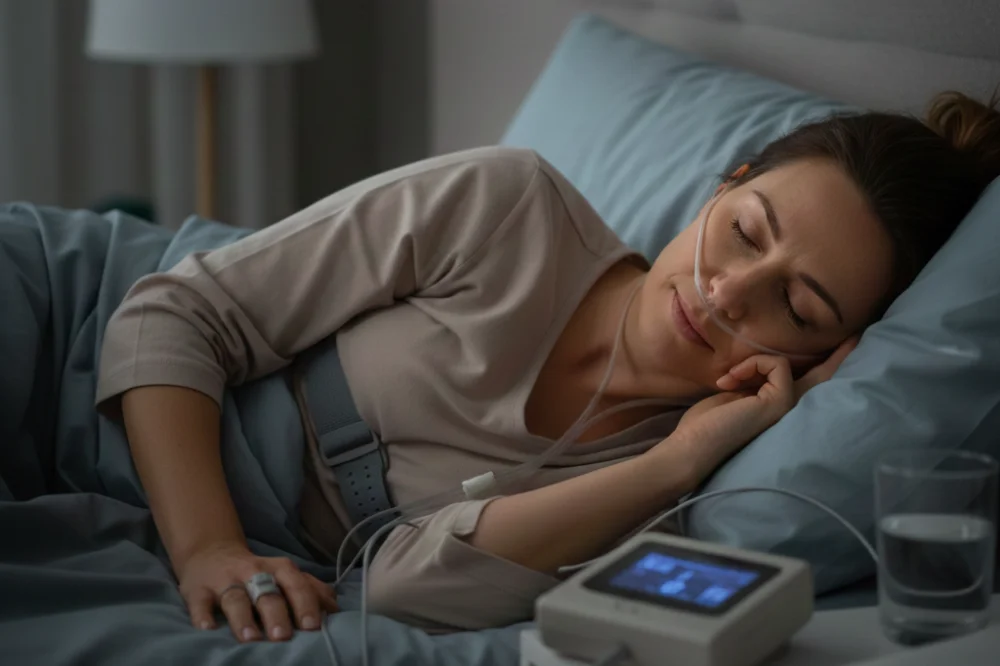
The only reliable way to determine whether snoring is simple or related to sleep apnea is by measuring breathing during sleep. Doctors use sleep studies that record breathing patterns, oxygen levels, and sleep stages overnight.
• In-lab sleep studies called polysomnography
• Home sleep apnea tests for appropriate patients
• Monitoring of breathing pauses and oxygen levels
• Measurement of apnea events per hour of sleep
These tests reveal whether breathing actually stops during sleep. If sleep apnea is diagnosed, providers can recommend treatments such as CPAP therapy, oral appliances, or lifestyle changes to stabilize breathing.
Next Steps if You Snore in Desert Hot Springs
Adults in Desert Hot Springs who notice loud or frequent snoring often begin by discussing symptoms with their primary care provider. Bed partners can provide helpful observations about breathing pauses, choking sounds, or restless sleep.
Sleep specialists in the Palm Springs and Rancho Mirage area can perform sleep studies that determine whether sleep apnea is present. Once diagnosed, airway-focused dental providers may also help with oral appliance therapy that supports the airway during sleep.
Addressing snoring early can prevent more serious breathing problems later. Many adults find that identifying the cause of snoring leads to better sleep for both themselves and their partners.
Better Sleep Starts With the Right Guidance
Snoring and sleep apnea may sound similar, yet the difference lies in whether breathing continues normally or repeatedly stops during sleep. Understanding that distinction helps adults recognize when snoring might be harmless and when it may signal a more serious sleep disorder.
Dr. Juana Cavinder and the team at Airway Dentistry in Desert Hot Springs help patients understand how airway health affects breathing and sleep quality. With decades of clinical experience and airway-focused training, Dr. Cavinder guides adults through evaluation and treatment options. If snoring or fatigue has become a concern, scheduling a consultation can help determine whether a sleep evaluation is the next step.
Frequently Asked Questions
Is snoring the same thing as sleep apnea?
Many people assume that snoring automatically means they have sleep apnea, yet the two conditions are not the same. Snoring is simply the sound produced when air passes through relaxed tissues in a narrowed airway and causes them to vibrate. Sleep apnea, however, involves repeated pauses or major reductions in breathing during sleep that disrupt oxygen levels and sleep cycles. The deeper concern behind the question is whether snoring is harmless or a warning sign of a breathing disorder. The most reliable way to tell the difference is through a sleep evaluation, because a sleep study measures breathing pauses, oxygen changes, and sleep disruption that cannot be identified from sound alone.
When should someone worry about snoring?
Occasional snoring can happen for many reasons, such as congestion, fatigue, or sleeping on the back. The concern usually arises when snoring becomes loud, frequent, and paired with other symptoms that suggest breathing is being disrupted. A better way to frame this question is to ask what patterns make snoring more likely to represent sleep apnea. Red-flag patterns include nightly loud snoring, witnessed pauses in breathing, gasping or choking during sleep, and daytime fatigue or headaches. When several of these signs appear together, sleep specialists recommend evaluation to rule out sleep apnea and protect long-term health.
Can you have sleep apnea without snoring?
Although loud snoring is one of the most recognizable symptoms of obstructive sleep apnea, it is possible to have sleep apnea without obvious snoring. The real question many patients are asking is whether breathing interruptions can occur quietly. In some cases, especially in women, older adults, or people with central sleep apnea, breathing pauses may happen without dramatic snoring sounds. Because symptoms vary widely, sleep specialists rely on objective testing rather than sound alone to diagnose the condition. A sleep study records breathing patterns, oxygen levels, and sleep stages, providing a clear answer about whether apnea events are occurring.
How do doctors diagnose sleep apnea?
Many people try to determine whether they have sleep apnea by listening to snoring recordings or using smartphone apps. The deeper issue is that these tools cannot measure breathing interruptions or oxygen levels accurately. Doctors diagnose sleep apnea using sleep studies that track breathing patterns, airflow, oxygen levels, heart rate, and sleep stages throughout the night. These studies can be performed in a sleep laboratory or with approved home testing equipment. The results show how often breathing pauses occur and help providers determine whether the condition is obstructive, central, or mixed before recommending treatment options.


