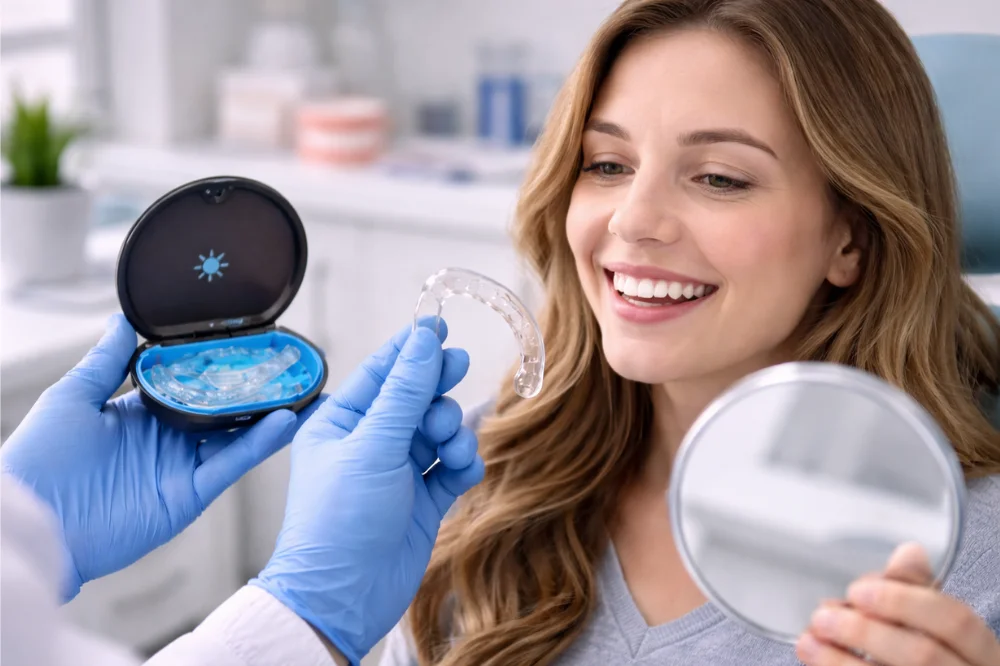

What a straighter smile costs you is not always the number on the treatment plan. It is the commitment, the daily discipline, and the quality of the evaluation that happens before any trays are made. Airway Dentistry DHS on Palm Drive helps patients in the Coachella Valley answer that question honestly. Before they spend a dollar. Dr. Juana R. Dr. Cavinder, DDS, MPH, has more than 30 years of clinical experience. She brings a whole-mouth perspective to every orthodontic conversation.
Invisalign has treated more than 22 million patients worldwide, per Align Technology’s 2025 annual data. Clear aligner treatment at Airway Dentistry DHS starts with an evaluation that covers far more than tooth position. Adults now account for more than 74 percent of the clear aligner market. That popularity is real, and so is the variation in outcomes. Not every case is a good fit, and the practices that tell you that upfront are the ones worth trusting. Source: Align Technology, Inc., Q4 2025 Financial Results.
What Is Invisalign and How Does It Work?
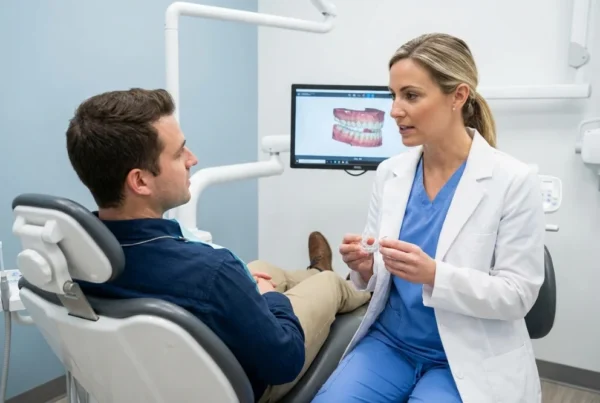
Invisalign is a system of custom-made clear plastic trays that move teeth gradually over time. Each tray is worn for about one to two weeks, then replaced with the next in the series. Most patients wear their trays 20 to 22 hours a day throughout treatment. The trays are removed for eating, drinking anything other than water, and brushing.
The system works best on crowding, spacing, and mild to moderate bite issues. Peer-reviewed orthodontic literature from 2024 and 2025 identifies crowding and spacing correction as the strongest outcomes for clear aligner therapy. More complex movements, including severe rotations and vertical adjustments, are less predictable. Some require supplementary techniques or a switch to traditional braces.
Who Is a Good Candidate for Invisalign?
Most adults and older teens with mild to moderate alignment issues are reasonable candidates. The bigger filter is compliance. Invisalign depends entirely on the patient wearing the trays for the prescribed hours. A patient who removes them frequently or leaves them out during travel will not get the promised result.
The system is not forgiving on wear time. That is also what makes it fair: the outcome reflects the effort. These are the clinical markers that make someone a genuinely strong fit:
- Mild to moderate crowding or spacing, the cases where clear aligners perform most reliably
- Adults or older teens with fully developed permanent teeth
- No active gum disease or bone loss that needs addressing first
- Realistic expectations about treatment length and daily wear commitment
- Willingness to wear a retainer after treatment to hold results
Patients from Dos Palmas and Hacienda Heights get more than a tooth-position conversation at Airway Dentistry DHS. Dr. Cavinder looks at the bite, the jaw, and whether airway function plays any role in how the teeth sit. The treatment plan that follows reflects the whole picture, not the cosmetic layer alone.
How Does Invisalign Compare to Traditional Braces?
The right choice between Invisalign and braces depends on case complexity and patient lifestyle more than personal preference. The table below shows where each option has a genuine advantage.
| Factor | Invisalign | Traditional Braces |
| Visibility during treatment | Nearly invisible | Visible metal brackets and wires |
| Removability | Removed for eating and cleaning | Fixed throughout treatment |
| Best for | Mild to moderate crowding and spacing | Moderate to complex cases, severe rotation |
| Compliance required | High (20-22 hours daily wear) | Low (fixed in place) |
| Treatment length | 6 to 18 months for most cases | 12 to 24 months typical |
| Cost range in California | $3,000 to $6,000 (general dentist) | $3,000 to $7,000 |
| Cleaning ease | Easier, trays are removable | Harder, brackets trap food |
Braces remain the stronger option for significant bite correction and complex movements. Invisalign handles most cases adults bring in. It has become the default for cosmetically motivated patients who wear the trays consistently. Patients from Palm Springs, Cathedral City, and along Pierson Boulevard who have seen multiple providers say the same thing. The quality of the evaluation matters more than the brand.
How Long Does Invisalign Treatment Take?
Treatment length depends on how much movement the case requires. Express options for minor corrections run three to four months. Comprehensive treatment for moderate misalignment typically runs 12 to 18 months. Complex cases can extend to 24 months. The average across all Invisalign treatments is 22.8 months, per Align Technology’s 2025 data. That figure reflects the full range, including complex cases that pull the average up.
What moves that number in practice is how consistently patients wear their trays and how the teeth respond. Missing hours compounds quickly. Skipping two hours each day adds up to more than 60 hours across a month. That gap shows in the outcome. Dr. Cavinder reviews progress at each appointment and adjusts expectations when the clinical picture calls for it.
Patients near Two Bunch Palms Resort and across the Coachella Valley get honest updates at each step. That includes when refinements are needed, not after the fact. Most patients complete treatment close to their original timeline when they follow the wear schedule consistently.

What Does Invisalign Cost in Desert Hot Springs?
In California, Invisalign at a general dental practice typically runs between $3,000 and $6,000. Orthodontic specialists price higher, usually between $4,000 and $8,000. Express cases for minor corrections fall between $1,500 and $3,500. Several factors push that number up or down:
- Number of aligners needed, which tracks directly with how much movement the case requires
- Whether the case involves bite correction alongside alignment, which adds complexity
- Provider type, since orthodontic specialists generally charge more than general dentists
- Whether refinements are needed mid-treatment, which can add to the total
Most dental insurance plans with orthodontic benefits apply that coverage to Invisalign. Plan maximums typically run $1,000 to $1,500. The ADA’s guidance on understanding dental costs is at mouthhealthy.org. Airway Dentistry DHS verifies benefits during intake so you know your out-of-pocket cost before committing.
Should I See a General Dentist or an Orthodontist for Invisalign?
Either can provide Invisalign. Align Technology trains both general dentists and orthodontists, and the system itself does not distinguish between them. What differs is the scope of the evaluation. A general dentist who addresses bite health, jaw function, and airway concerns brings a broader view. A specialist focused only on tooth movement cannot offer that.
Dr. Cavinder’s background in general and airway-focused dentistry means the evaluation includes factors a cosmetically focused assessment would miss. That matters most for patients whose alignment connects to bite habits, jaw tension, or nighttime grinding. Invisalign alone will not fix those patterns if they go unaddressed.
Your Invisalign Evaluation Starts With an Honest Conversation
The clearest sign of a good Invisalign provider is one who tells you when you are not a candidate. Not every case fits. A practice that says yes to everyone is not doing the evaluation justice.
Dr. Juana R. Cavinder, DDS, MPH, has served patients in Desert Hot Springs for more than 30 years. She is a member of the ADA, the California Dental Association, and the Tri-County Dental Society. Her approach to Invisalign and clear aligner treatment puts the full clinical picture first. You leave the evaluation knowing exactly where you stand. Schedule your evaluation at Airway Dentistry DHS or call (760) 329-2227.
Frequently Asked Questions
How long does Invisalign treatment take in the Coachella Valley?
Treatment length in the Coachella Valley depends on how much movement your case requires. Minor corrections with Invisalign Express take three to four months. Comprehensive treatment for moderate crowding or spacing typically runs 12 to 18 months. The AAO notes that average full treatment duration is closer to 22 months when complex cases are included. More detail on treatment timelines is at aaoinfo.org. Dr. Cavinder reviews each patient’s progress at every appointment and gives honest updates when the timeline shifts.
Is Invisalign better than braces for adults?
For most adults with mild to moderate alignment concerns, Invisalign is a strong option. It is discreet, removable, and produces reliable results on crowding and spacing. Braces remain superior for complex bite correction and severe rotations. The honest answer is that it depends on your specific case, not on a general preference. The American Dental Association’s patient guidance on orthodontic treatment options is at ada.org. An evaluation covering bite, jaw function, and alignment together gives you the clearest picture of which option fits.
How much does Invisalign cost in Desert Hot Springs?
At a general dental practice in California, comprehensive Invisalign treatment typically runs between $3,000 and $6,000. Limited or Express cases for minor corrections usually fall between $1,500 and $3,500. Orthodontic specialists tend to price higher. Most dental insurance plans with orthodontic benefits apply that coverage to Invisalign up to the plan maximum. The ADA’s guidance on understanding dental costs is at mouthhealthy.org. Airway Dentistry DHS verifies benefits during intake so you know your out-of-pocket cost before committing.
Can a general dentist do Invisalign or do I need an orthodontist?
Both general dentists and orthodontists can provide Invisalign. Align Technology trains and certifies providers across both specialties, and the treatment system is the same. The difference is in the scope of the evaluation, not the trays themselves. Invisalign’s provider information is at invisalign.com. At Airway Dentistry DHS, Dr. Dr. Cavinder’s evaluation reviews bite function and airway health alongside tooth position. That gives patients a more complete picture than a cosmetically focused assessment.