




A Thoughtful Way to Refine Your Smile
Porcelain veneers are often chosen by people who feel their smile does not reflect how they want to show up in the world. Stains that do not respond to whitening, chipped edges, or uneven teeth can quietly affect confidence. Veneers offer a way to improve appearance while maintaining a natural look and feel.
At Airway Dentistry, veneer treatment is approached with care and clear guidance. Dr. Juana R. Cavinder, DDS, MPH, brings more than 30 years of clinical experience and a public-health perspective to cosmetic dentistry. Patients in Desert Hot Springs and nearby communities value veneer care that is conservative, well-planned, and explained clearly before any commitment is made.
What Are Porcelain Veneers?
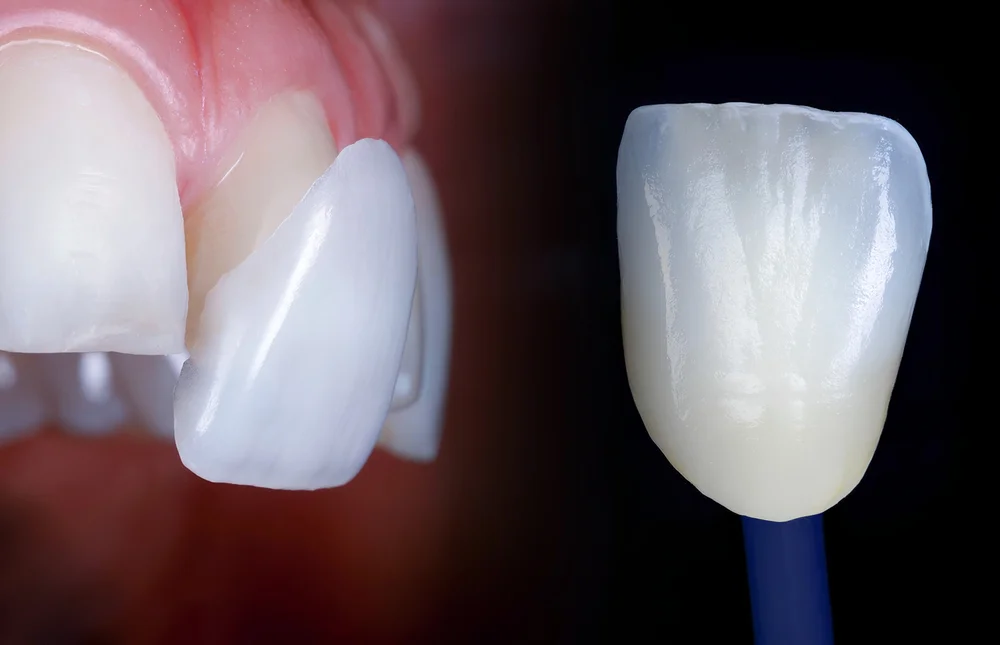
Porcelain veneers are thin ceramic shells bonded to the front surfaces of teeth. They are custom-made to improve the shape, color, and overall appearance of the smile. Veneers are crafted from porcelain or ceramic materials designed to mimic natural enamel.
Veneers differ from crowns and bonding in important ways. Crowns cover the entire tooth, while veneers only cover the visible front surface. Bonding uses resin material and is less durable, whereas porcelain veneers are stronger and more stain-resistant.
Why People Choose Porcelain Veneers
Porcelain veneers are often chosen when cosmetic concerns cannot be corrected with whitening or minor adjustments. They are designed to address multiple issues at once, creating a more balanced and uniform smile. Many patients appreciate that veneers can provide long-lasting improvement without ongoing treatments.
Veneers are commonly used for deep stains, chips, cracks, gaps between teeth, uneven shapes, worn enamel, or mild alignment concerns. They can also help improve symmetry and brightness when teeth appear dull or inconsistent. Evaluation helps determine whether veneers are appropriate for your goals.
What Porcelain Veneers Can Fix
Porcelain veneers are designed to correct several cosmetic concerns in a single treatment plan. They are most effective when teeth are otherwise healthy.
- Chipped or cracked teeth
- Dark or resistant stains
- Small gaps between teeth
- Uneven edges
- Worn enamel
- Teeth that appear dull or irregular
Because veneers address the front surfaces of teeth, planning focuses on balance and proportion. Conservative preparation helps protect long-term tooth health.