




A Discreet Way to Straighten Your Smile
Clear aligners offer a modern way to straighten teeth without the look or feel of metal braces. Many people want a healthier, more confident smile but hesitate because of visibility, comfort, or lifestyle concerns. Clear aligners provide a low-profile option that fits into daily life while still delivering predictable orthodontic results.
At Airway Dentistry, clear aligner treatment is planned with education and long-term oral health in mind. Dr. Juana R. Cavinder, DDS, MPH, brings more than 30 years of clinical experience and a public-health perspective to orthodontic care. Patients from Desert Hot Springs and nearby communities appreciate treatment that is explained clearly and tailored to real-world routines.
What Are Clear Aligners?
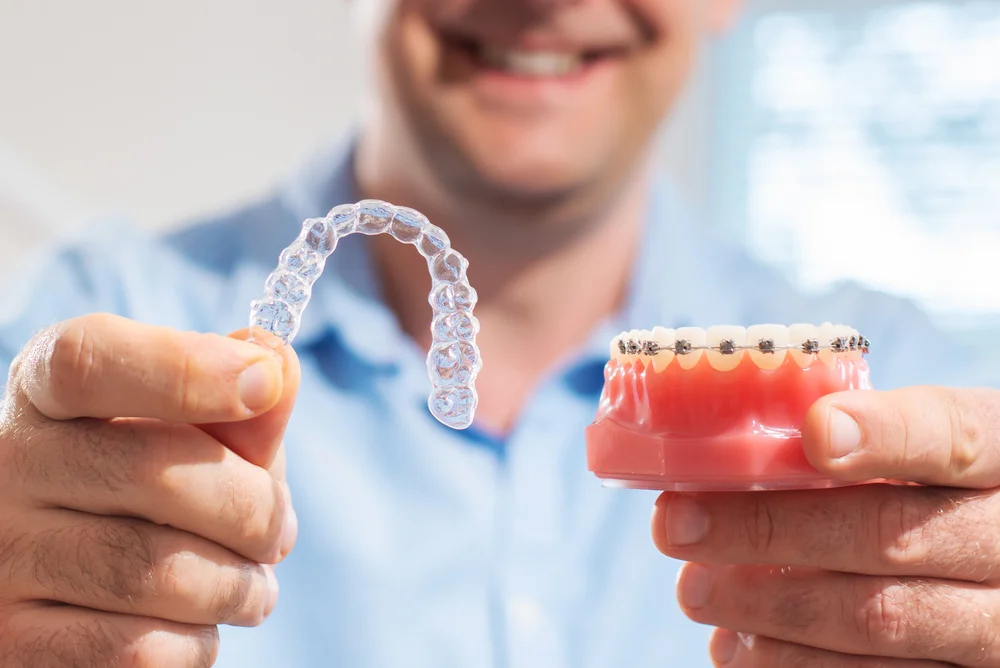
Clear aligners are custom-made, transparent plastic trays that fit snugly over your teeth. They are an orthodontic treatment designed to straighten teeth and correct mild to moderate bite issues. Because they are nearly invisible, many adults and teens prefer them over traditional braces.
Aligners are removable, which means you can take them out to eat, drink, brush, and floss. Teeth are moved gradually as each set of aligners is worn and then replaced every one to two weeks. Treatment is planned digitally using 3D imaging so tooth movement is precise and controlled.
How Clear Aligners Work
Clear aligner treatment begins with a consultation and a 3D scan of your teeth. That scan is used to create a digital treatment plan showing how your teeth are expected to move over time. Many patients like being able to preview their projected smile before treatment starts.
A series of custom aligners is then fabricated, often between 20 and 40 sets depending on complexity. Each set applies gentle pressure to move teeth incrementally, and checkups every six to twelve weeks allow progress to be monitored. After treatment is complete, retainers are provided to help maintain results.
What Clear Aligners Can Fix
Clear aligners are effective for many common orthodontic concerns when cases are mild to moderate. Evaluation helps determine whether aligners are appropriate or if another option is needed.
- Crowded or overlapping teeth
- Gaps or spacing issues
- Overbite
- Underbite
- Crossbite
- Open bite
- Mild to moderate bite misalignment
- Crooked or rotated teeth
- Shifting after previous braces
More severe alignment or bite problems may require traditional braces. Proper assessment helps guide the right recommendation.